
In today’s demanding commercial landscape, the efficient use of space is not just a benefit; it is often a necessity for growth, profitability, and operational excellence.
As property prices rise and industrial vacancy rates plummet, businesses across various sectors—from warehousing and manufacturing to retail and offices—are constantly seeking clever, cost-effective strategies to expand their capacity without the immense expense and disruption of relocating or undertaking large-scale civil construction.
One of the most effective, versatile, and structurally sound solutions to this spatial crisis is the installation of a mezzanine structure.
Unlocking Vertical Potential: What Precisely is a Mezzanine?
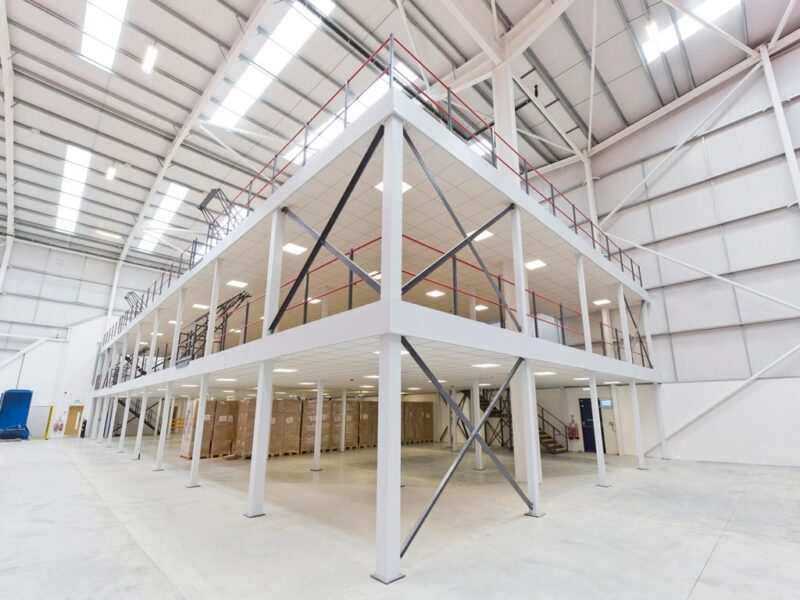
A mezzanine floor represents an intermediate floor level built between the main ground floor and the ceiling of a building. Unlike a traditional storey, a mezzanine is semi-permanent, designed to be free-standing and independent of the building’s primary structure (though often braced against it).
This allows for rapid construction and, crucially, flexibility in design and future modification.
By effectively capitalising on the unused vertical volume within a high-ceilinged building—often referred to as “dead air”—mezzanines transform empty space into highly valuable, usable floor area.
This instant gain in square footage is why they are often referred to as a “space multiplier.”
When considering this form of expansion, understanding the technical specifications and structural requirements is paramount.
For a detailed explanation of the fundamental concept and its various applications, it is helpful to consult experts in the field.
To fully grasp what is a mezzanine floor, including its legal and structural definitions, consulting a specialist resource can provide the essential foundational knowledge needed for project planning.
The ability to integrate these structures seamlessly into existing operations makes them an incredibly attractive option for companies facing capacity constraints.
The Commercial Edge: Mezzanine Flooring for Business
The core appeal of mezzanine flooring lies in its versatility. It is not a one-size-fits-all solution, but a highly customisable structural system tailored to specific business needs.
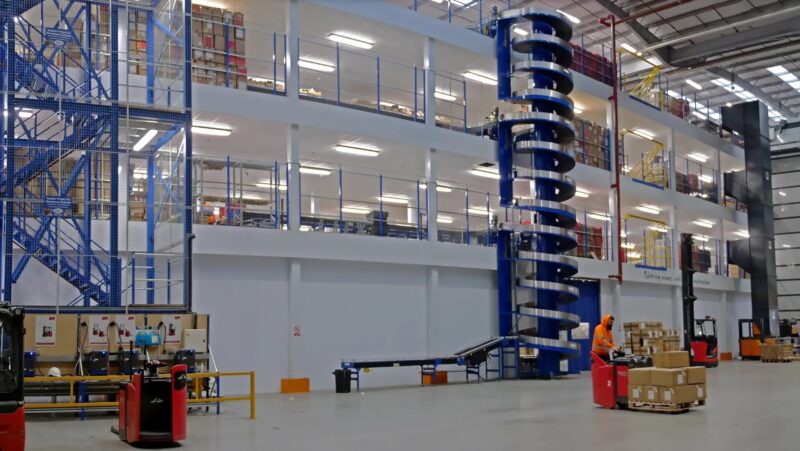
- Enhancing Warehouse and Storage Capacity For logistics and warehouse operations, where storage density is king, a storage mezzanine is a game changer. It enables businesses to double or even triple their floor space, allowing for more racking, shelving, or bulk storage of heavy-duty goods. This immediate increase in storage space improves inventory management, speeds up order fulfilment, and postpones the need for costly external storage or a move to a larger facility. Furthermore, modern mezzanines can be engineered to support automation, such as conveyor systems and sortation robots, ensuring the facility is future-proofed for Industry 4.0 standards.
- Optimising Production and Manufacturing In manufacturing environments, industrial mezzanine floors can segregate different aspects of the production process. For example, the ground floor might be dedicated to heavy machinery and assembly lines to minimise vibration, while the mezzanine level could house quality control, light assembly, or even administrative office space. This separation streamlines workflows, reduces cross-contamination, and improves the overall organisation of the industrial unit.
- Creating Bespoke Retail and Office Environments Retail businesses use mezzanines to create distinct shopping areas, allowing for a creative split between product display and back-of-house operations. In office settings, a mezzanine floor can be the perfect solution for creating breakout areas, meeting rooms, or expanding staff facilities without sacrificing the open-plan feel of the main floor. The design can be adapted to match the aesthetic of the existing space, using finishes like timber decking, glass balustrades, and bespoke staircases to ensure a professional and attractive look.
The Economic and Strategic Argument
Beyond the physical benefits, the financial case for a mezzanine is compelling.
Relocating a business is fraught with hidden costs: legal fees, stamp duty, agency fees, and the significant “downtime” cost where operations halt during the move.
A mezzanine installation, by comparison, is a capital equipment purchase. It is typically far cheaper per square metre than acquiring new premises.
Moreover, because mezzanines are demountable steel structures, they offer a unique strategic advantage: portability.
If a business eventually outgrows its premises and must move, the mezzanine can often be dismantled and reinstalled at the new location.
This modularity classifies them as an asset rather than a sunk construction cost.
Additionally, from a sustainability perspective, utilising existing building volume reduces the carbon footprint associated with new builds, aligning with modern corporate social responsibility (CSR) goals.
Beyond the Structure: Safety, Design, and Compliance
While the structural benefits are clear, the successful implementation of any mezzanine project hinges on meticulous attention to detail regarding safety and building regulations.
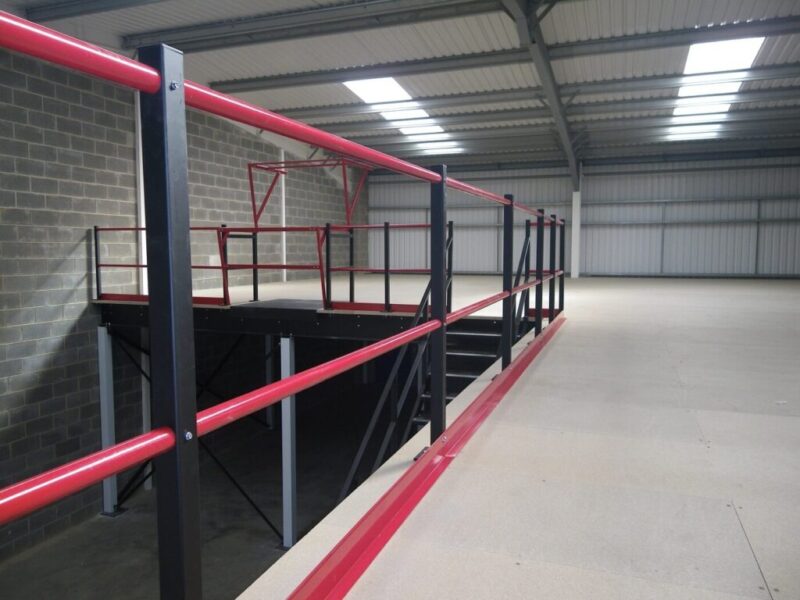
A mezzanine floor installation is subject to stringent requirements concerning fire resistance (often requiring suspended ceilings and column casings), load-bearing capacity, and access provision.
Professional mezzanine floor suppliers will manage the entire process, from the initial design and structural calculations to the final installation and sign-off.
They ensure the use of quality materials, such as high-grade structural steel and appropriate floor decking (such as P5 chipboard or steel chequer plate), guaranteeing the structure’s longevity and safety.
The design must also consider the necessary access points, typically through well-placed staircases, goods lifts, and pallet gates for safely moving inventory between levels.
Choosing the right mezzanine floor system is a strategic decision that offers an immediate and significant return on investment.
It is an environmentally conscious and financially astute way to future-proof a business, providing the flexibility needed to respond to changing market demands without committing to expensive and inflexible real estate expansions.
By transforming underutilised vertical space, businesses can achieve a higher degree of operational efficiency and set themselves up for sustainable growth.